
[Survey] How Homeowners Prep Their Homes & Gardens for Spring Pests
As the temperatures rise, two things are certain: homeowners are heading outside to garden, and pests are right behind them. In our latest survey of nearly 1,000 homeowners, we explored who’s planning a garden this spring, how they’ll protect it from pests, and what steps they’re taking to keep bugs from making their way indoors. Here’s what we found.
91% of Homeowners Plan to Garden in 2026
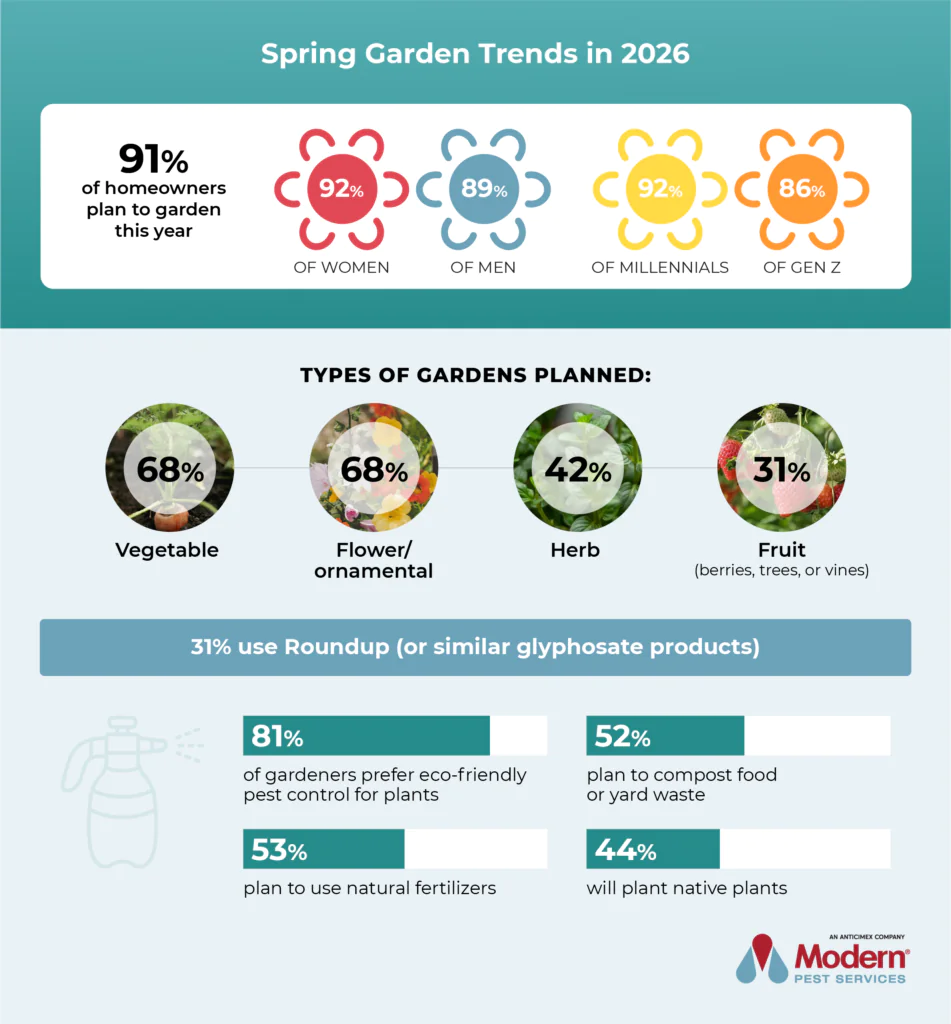
The gardening bug is spreading, and nearly all homeowners (91%) plan to grow something this year. Enthusiasm cuts across generations, with 92% of Millennials and 86% of Gen Z getting their hands dirty. Gardening is also broadly popular across genders, with 92% of women and 89% of men planning to participate.
The types of gardens they are planning are a mix of functional and decorative:
- Vegetable – 68%
- Flower/ornamental – 68%
- Herb – 42%
- Fruit (berries, trees, or vines ) – 31%
Even after debates about glyphosate safety, 31% will use Roundup weed killer (or similar glyphosate products).
On the other hand, eco-friendly gardening is trending this year. Over 4 in 5 (81%) prefer eco-friendly pest control for plants. More than half (53%) plan natural fertilizers, 52% will compost food or yard waste, and 44% will plant native plants.
Half Plan Eco-Friendly Pest Control Methods Like Sprays and Defensive Plants
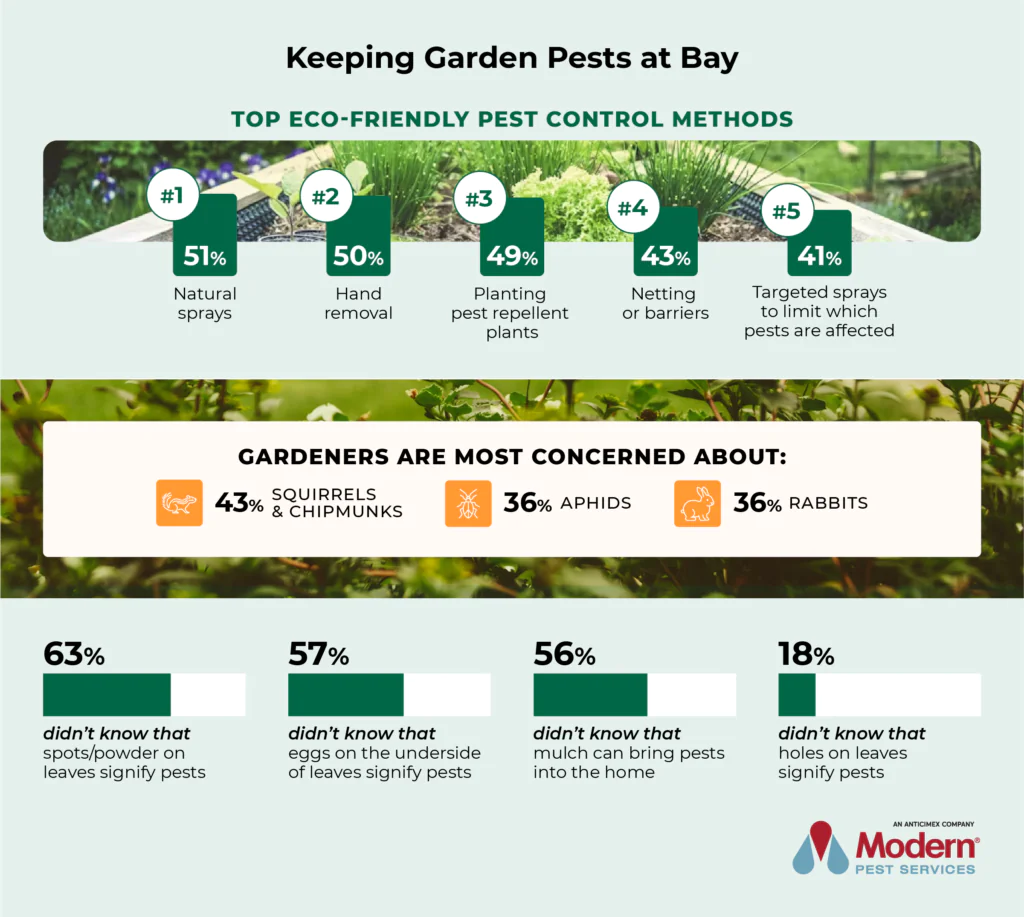
When it comes to garden pest control, the top eco-friendly methods gardeners will use include natural sprays (51%), removing by hand (50%), and planting pest repellent plants like marigolds, mint, and lavender (49%). Others will use netting or barriers (43%) or targeted sprays to limit which pests are affected (41%).
Which pests are gardeners trying to keep out? Top concerns include insects, caterpillars, and wildlife:
- Squirrels and chipmunks – 43%
- Aphids – 36%
- Rabbits – 36%
- Caterpillars/hornworms – 31%
- Slugs/snails – 29%
- Japanese beetles – 25%
- Deer- 23%
- Grubs – 20%
Many gardeners also have some blind spots. When it comes to which signs they’re missing, 63% didn’t know that spots or powder on leaves signify pests, 57% didn’t know to look for eggs on the underside of leaves, and 18% didn’t even know that holes on leaves point to a pest issue. Over half (56%) do not know that mulch can bring pests into the home.
“The biggest mistake I see isn’t using mulch—it’s allowing ‘mulch creep.’ To protect your home, maintain an 18-inch buffer zone of bare soil or gravel between your garden beds and the foundation. When mulch touches your siding, it creates a moisture-rich pathway that allows termites, ants, and other crawling pests to bypass your home’s natural defenses. A clean buffer zone breaks that bridge, forcing pests out into the open where they can’t hide ,making them easy prey.”
Dan S. – SMART/Field Specialist
How Homeowners Will Prevent Pests in Their Yard & Interiors
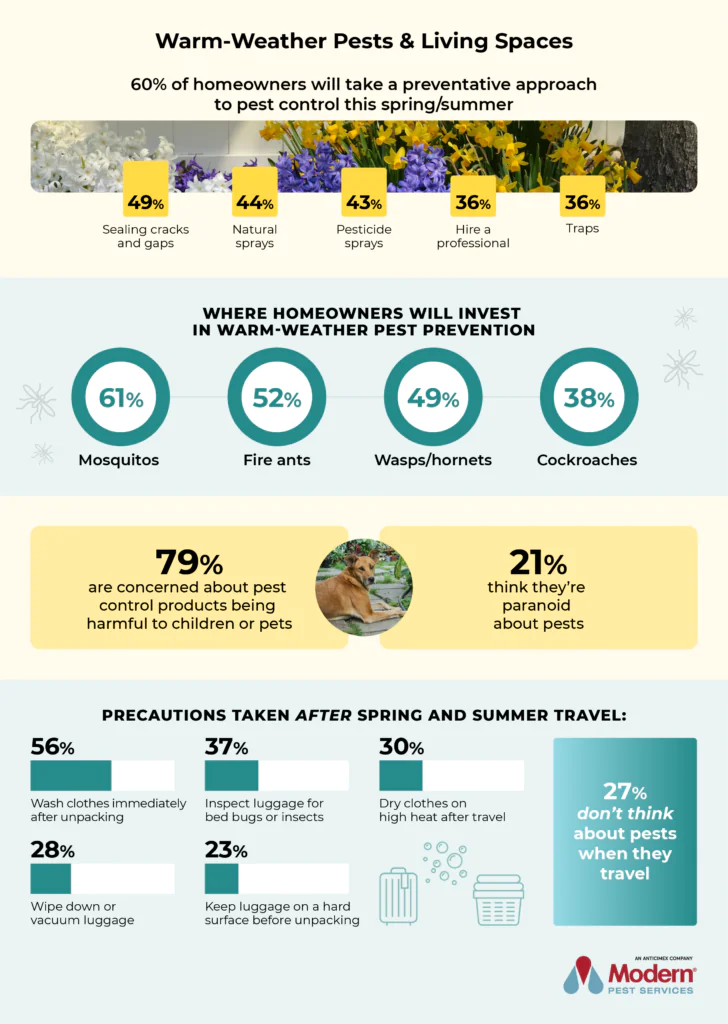
Pests are far more than a gardening issue, and 60% of homeowners will take a preventative approach to pest control this spring and summer. Further, 1 in 5 claim to be paranoid about pests.
Preventative pest control steps homeowners will take include:
- Sealing cracks and gaps – 49%
- Natural sprays – 44%
- Pesticide sprays – 43%
- Hiring a professional – 36%
- Traps – 36%
Whether they are hiring pest control professionals or purchasing DIY materials, homeowners will mostly invest in preventing mosquitos (61%), which can be an itchy nuisance during outdoor activities. They will also invest in preventing fire ants (52%), stinging insects like wasps and hornets (49%), and cockroaches (38%).
While 79% are concerned about pest control products being harmful to children or pets, there are fortunately safer options available.
“Many people imagine pest control as simply spreading strong chemicals around, but today’s methods are far more careful and precise. Every product we use is applied according to strict federal guidelines, which means we’re legally required to follow exact directions for safe and effective use. The treatments themselves are designed to target the specific biology of pests—not people or pets. And once these products dry on a surface, they become stable and stay in place, which greatly reduces their potential to transfer to curious toddlers or pets. This ‘locked‑in’ state is what allows us to build a protective barrier against pests while keeping your home comfortable and safe for everyone who lives in it.”
Dan S. – SMART/Field Specialist
Post-Travel Pest Prevention
Beyond pests entering through mulch, cracks, and entryways are the pests that hitchhike in our suitcases. While our previous study found that bed bugs are a top-searched pest in America, over a quarter (27%) admit to not thinking about pests when they travel.
For those who do take precautions after travel, methods include:
- Washing clothes immediately after unpacking – 56%
- Inspecting luggage for bed bugs or insects – 37%
- Drying clothes on high heat after travel – 30%
- Wiping down or vacuum luggage – 28%
- Keep luggage on a hard surface before unpacking – 23%
While washing clothes was listed as the top method, bed bugs are more effectively eliminated by putting clothes directly into the dryer on high heat.
“For anyone traveling, my biggest piece of advice is to be aware of your surroundings and take a few simple precautions when you get home. If you think you may have been exposed to bedbugs—or just want to play it safe—avoid bringing your luggage directly into the house. Instead, unpack outside or in the garage and place items in a sealed trash bag. Move clothing straight to the dryer and run it on the highest heat setting allowed for at least 45 minutes before laundering as usual.
If you notice small bite marks on the arms, chest, or neck, or see rust‑colored spots on bedding, it’s best to call a professional right away. DIY treatments often make infestations worse and can create unsafe conditions for your family and pets. A professional can assess the situation safely and effectively.”
Dan S. – SMART/Field Specialist
Enjoy the Warm Weather with a Pest-Free Property
Mosquitoes, fleas, and ticks thrive in the same shaded, leafy environments that make gardens and backyards so enjoyable — and with homeowners planning to spend time outdoors this season, protecting that space matters. The good news is that you don’t have to choose between a beautiful yard and a safe one. Modern Pest Services offers a Mosquito, Flea & Tick program that treats your property with low-toxicity applications throughout the season, safe for kids and pets once dry. If you’re in Maine, Massachusetts, New Hampshire, Connecticut, or Rhode Island, get a free quote to take back your yard before peak season hits.
Methodology
In March 2026, we surveyed 991 homeowners about their home, garden, and pest control plans for the spring and summer. 50% were women, 49% were men, and 1% were nonbinary or preferred not to say. Ages ranged from 20 to 75, with an average age of 46.
For media inquiries, please reach out to media@digitalthirdcoast.net.
Fair Use
When using this data and research, please attribute by linking to this study and citing Modern Pest Services.